
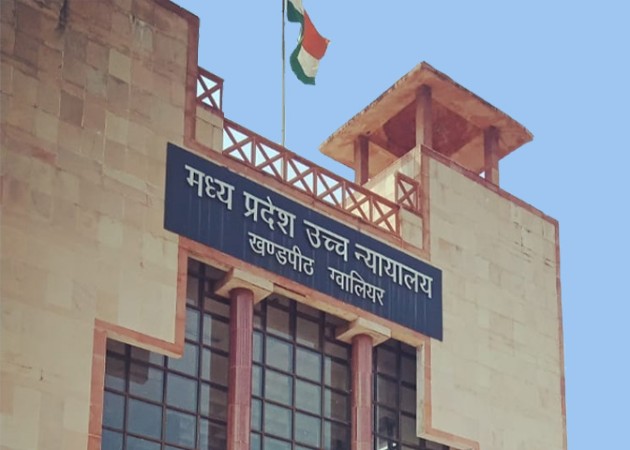
On June 16, 2025, Hon’ble Madhya Pradesh High Court gave a judgment in the case of Anjali Sharma vs. Raman Upadhyay. The case revolved around husband pleading adultery on part of the wife and installing such an application on the wife’s mobile, WITHOUT her consent which forwarded her WhatsApp messages to the husband’s mobile. These messages were sought by the husband as the exhibits in the Family Court (Case No. 122-A/2018) , to which the wife objected, but the Learned Family Court allowed the husband to exhibit the WhatsApp messages.
On this issue, the counsel for the wife invoked the following IT Act sections:
Section 43- Penalty and compensation for damage to computer, computer system, etc.
Section 66- Computer related offences.
Section 72- Penalty for Breach of confidentiality and privacy
Which comes in conflict with the Sections 14 and 20 of the Family Courts Act.
Section 14- “Application of Indian Evidence Act, 1872.- Court may receive as evidence any report, statement, documents, information or matter that may, in its opinion, assist it to deal effectually with a dispute, whether or not the same would be otherwise relevant or admissible under the Indian Evidence Act, 1872 (1 of 1872).”
Section 20- “Act to have overriding effect.- The provisions of this Act shall have effect notwithstanding anything inconsistent therewith contained in any other law for the time being in force or in any instrument having effect by virtue of any law other than this Act.”
While the judgement discussed various aspects of intersection between provisions of Evidence Act and the Family Courts Act, it also highlighted how Article 21 of the wife has been infringed by stating- “it is profitable to deal with the argument of learned counsel for petitioner/ wife that the evidence produced by respondent is not obtained by legal means and the method adopted by him for obtaining such evidence has violated wife’s right of privacy as enshrined under Article 21 of Constitution of India”.
The relevant portion, that follows up the above discussion has been reproduced below:
“Therefore, when there is no right to privacy specifically conferred by Article 21 of the Constitution of India and with the extensive interpretation of the phrase “personal liberty” this right has been read into Article 21, it cannot be treated as an absolute right. What is emphasized is that some limitations on this right have to be imposed and particularly where two competing interests clash. In matters of the aforesaid nature where the legislature has conferred a right upon his spouse to seek divorce on such grounds, it would be the right of that spouse which comes in conflict with the so-called right to privacy of the respondent. Thus the court has to reconcile these competing interests by balancing the interests involved.”
The Court giving a hint into justifying the consideration of WhatsApp chats as exhibit stated that- “ Section 14 of Family Courts Act and Section 122 of Indian Evidence Act are some such statutory provisions which permits invasion to right to privacy. It is worth mentioning here that vires of either of the aforesaid provisions are not under challenge and, therefore, the same have to be deemed as valid, fair and reasonable.”
The Contest:
A contest between the right to privacy and the right to fair trial, both of which arise under Article 21 of our Constitution, the right to privacy may have to yield to the right to fair trial.
“It is a settled concept of fair trial that a litigating party gets a fair chance to bring relevant evidence before court. It is important to appreciate that while the right to privacy is essentially a personal right, the right to fair trial has wider ramifications and impacts public justice, which is a larger cause.”
After in depth discussion and referring to a number of precedents, the Hon’ble High Court held that-
(to read detailed pointers please visit https://indiankanoon.org/doc/51064190/ . Excerpts relevant to the present discussion have been reproduced below)
(a) the evidence is admissible so long as it is relevant, irrespective of the fact how it is collected. The possible misuse of this rule of evidence, particularly in the context of the right to privacy, can be addressed by prudent exercise of judicial discretion by the Family Court, not at the time of receiving evidence but at the time of using evidence at the stage of adjudication;
(b) merely admitting evidence on record is not proof of a fact-in-issue or a relevant fact.
(c) the test of ‘relevance’ ensures that the right of a party to bring evidence to court, and thereby to a fair trial, is not defeated.
(d) merely because a court allows evidence to be admitted, does not mean that the person who has illegally collected such evidence is absolved of liability that may arise, whether in civil or criminal law or both
(e) such evidence must be received and treated with caution and circumspection and to rule-out the possibility of any kind of tampering, the standard of proof applied by a court for the authenticity and accuracy of a such evidence should be more stringent as compared to other evidence.
The judgement upheld the impugned order, dated 13/4/2023, passed by learned Family Court in Case no.122-A/2018(HMA) and dismissed the petition.
_
Greetings,
Dear Readers!
“Your Legal-Tech Brew!” is a blog as cliché as any other blog…. It is an honest attempt towards compiling recent news in cyber-legal space, for the readers to understand right from the basic terminologies to analyzing existing legal framework across dimensions of cyberspace through various brief posts.
(The content of the blog is original work of the author, due credits have been given for the content referred from different sources. The blog is for information purpose only.)
📎
(The blog and content therein including the figures, is an original work of the author, using the content without prior permission from the author is not encouraged.)
 YLTB!
YLTB! 
Leave a comment